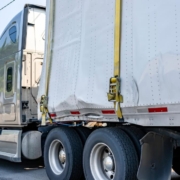

Truck Driver Hours-of-Service Violations on I-68: How Fatigue Causes Morgantown Truck Accidents
The stretch of Interstate 68 that cuts through Morgantown is an economic artery, constantly flowing with commercial trucks hauling goods across West Virginia and beyond. For local drivers, sharing the road with these massive tractor-trailers is a daily necessity. Yet, it carries a significant and often invisible risk—the danger of a fatigued truck driver behind the wheel of an 80,000-pound vehicle. When a drowsy driver causes a crash, the consequences are frequently catastrophic.
Unlike a typical car accident, a collision involving a commercial truck is a different legal event entirely. It is governed by a complex web of federal safety regulations designed to prevent these exact tragedies.
The Federal Mandate Against Drowsy Driving: What Are the Hours-of-Service Rules?
To combat the well-documented dangers of driver fatigue, the Federal Motor Carrier Safety Administration (FMCSA) establishes and enforces strict Hours-of-Service (HOS) regulations. These are not suggestions; they are federal laws that every interstate commercial truck driver and motor carrier must follow. A driver can be in perfect compliance with West Virginia traffic laws but still be operating negligently by violating an HOS rule.
The core provisions of the HOS regulations include:
- The 14-Hour Driving Window: After starting a shift, a driver has a 14-hour consecutive window to complete all their driving. Once this window closes, they cannot drive again until they have taken at least 10 consecutive hours off duty.
- The 11-Hour Driving Limit: Within that 14-hour window, a driver is only permitted to drive for a maximum of 11 total hours.
- The 30-Minute Break Rule: A driver may not operate the vehicle if more than eight cumulative hours of driving time have passed without at least a 30-minute break from driving.
- The 60/70-Hour Limit: A driver cannot be on duty for more than 60 hours in any 7-consecutive-day period or 70 hours in any 8-consecutive-day period. This “rolling” total prevents drivers from working excessive hours week after week.
These rules were created for one primary reason: to ensure commercial drivers get enough rest to operate their vehicles safely.
Why Do Hours-of-Service Violations Occur?
If the rules are clear, why do drivers break them? The reasons are often systemic and rooted in the economic pressures of the trucking industry. While some drivers make a poor choice to push their limits, many violations stem from company policies and industry practices.
Common causes of HOS violations include:
- Economic Pressure: Many drivers are paid by the mile, not by the hour. This creates a direct financial incentive to drive more miles in less time, even if it means bending or breaking safety rules.
- Unrealistic Delivery Schedules: Trucking companies, freight brokers, or shippers may impose delivery deadlines that are nearly impossible to meet without speeding or exceeding HOS limits.
- Lack of Safe Parking: A nationwide shortage of safe and available truck parking often forces drivers to continue driving when they should be resting because they have nowhere to stop for their mandatory breaks.
- Log Falsification: Although less common with the advent of electronic logs, some drivers may still attempt to manipulate their records to conceal HOS violations.
- Company Culture: Some motor carriers may implicitly or explicitly encourage drivers to prioritize delivery times over safety compliance, creating a culture where violations are overlooked until a crash occurs.
How Does Driver Fatigue Affect Driving Performance?
The FMCSA regulates driving hours because fatigue has a scientifically proven effect on a person’s ability to drive. A tired driver can be just as dangerous as an impaired one. The cognitive and physical impairments caused by fatigue directly lead to the kinds of driving errors that cause horrific accidents on I-68.
Fatigue can cause the following dangerous effects:
- Slowed Reaction Time: A fatigued driver takes longer to perceive a hazard, decide how to react, and execute a maneuver like braking or steering. On the highway, a delay of even one second can be the difference between a near-miss and a fatal collision.
- Impaired Judgment: Drowsiness affects a driver’s ability to make sound decisions, such as judging the speed of other vehicles or determining a safe following distance.
- Reduced Vigilance: Tired drivers are less attentive to their surroundings. They may fail to notice changing traffic conditions, construction zones near the Cheat Lake bridge, or a car merging into their lane.
- Microsleeps: A driver can fall asleep for several seconds without even realizing it. During a microsleep, a truck traveling at 65 miles per hour can cover the length of a football field with no one in control.
- Lane Deviation: Difficulty staying within a single lane is a classic sign of a drowsy driver. This can lead to sideswipes or head-on collisions.
The Role of Electronic Logging Devices (ELDs) in a Morgantown Accident Claim
To ensure compliance with HOS rules, nearly all commercial trucks are now required to be equipped with an Electronic Logging Device (ELD). This device connects directly to the truck’s engine and automatically records driving time, engine hours, vehicle movement, and location.
The ELD is essentially the “black box” for a driver’s hours. In the event of a crash, the data stored on the ELD is one of the most important pieces of evidence. It can provide a clear, objective record of the driver’s activities leading up to the accident and can often definitively prove whether an HOS violation occurred. A thorough legal investigation will always involve securing and analyzing this ELD data to see if the driver was operating within the legal limits.
Proving an HOS Violation Caused the I-68 Crash
Simply showing that a driver was over their hours is not enough. A successful claim must connect that violation to the cause of the accident. This requires a prompt and methodical investigation, as trucking companies and their insurers begin building their defense immediately.
The process for establishing a link between an HOS violation and a crash involves several steps:
- Immediate Evidence Preservation: The first step is to send a formal spoliation letter to the motor carrier. This is a legal notice demanding that they preserve all relevant evidence, including ELD data, the truck’s Electronic Control Module (ECM) data, driver qualification files, and maintenance records.
- Data Acquisition and Analysis: An attorney will obtain the ELD and ECM data through the legal discovery process. This data reveals the truck’s speed, braking activity, and the driver’s hours of service.
- Cross-Referencing with Other Documents: The driver’s logs are compared against other records like fuel receipts, bills of lading, and dispatch instructions. Discrepancies can reveal attempts to falsify records or show the pressure the driver was under to meet a schedule.
- Reviewing the Driver’s History: The driver’s qualification file is examined for any past HOS violations, which could indicate a pattern of reckless behavior or negligent supervision by the company.
- Gathering Witness Statements: Witnesses who saw the truck’s erratic driving in the miles leading up to the Morgantown crash can provide powerful testimony that corroborates the data and paints a picture of a fatigued driver.
Negligence Per Se: How a Rule Violation Simplifies Proving Fault
In a typical personal injury claim, the injured person must prove the other party was “negligent” by failing to act with reasonable care. However, when a person violates a safety law, a legal doctrine called “negligence per se” may apply.
This doctrine states that an act is considered negligent simply because it violates a regulation that was enacted to protect the public. The FMCSA’s Hours-of-Service rules are a perfect example. They exist to prevent accidents caused by tired truck drivers. Therefore, if an investigation reveals that a truck driver exceeded the 11-hour driving limit and then caused a chain-reaction collision near the University Avenue exit, that violation itself establishes negligence. The injured party does not have to argue what a “reasonable” driver would have done; the violation of the safety rule is enough.
Who Is Held Responsible for a Fatigue-Related Truck Accident?
One of the greatest complexities in a truck accident case is identifying all responsible parties. Liability often extends far beyond the individual behind the wheel. Because of the extensive federal regulations governing the industry, several entities could share fault for a crash caused by fatigue.
Potentially liable parties include:
- The Truck Driver: For their direct negligence in violating HOS rules and operating the vehicle while fatigued.
- The Motor Carrier (Trucking Company): The company is often liable for the driver’s actions under a legal principle called vicarious liability. The company can also be held directly negligent for its own failures, such as encouraging drivers to violate HOS rules, failing to properly train drivers on fatigue management, or creating impossible delivery schedules.
- The Shipper or Broker: In some instances, the company that hired the trucking company could be held liable if they created a delivery schedule they knew or should have known would require the driver to violate safety regulations.
What Compensation Can Be Recovered After a Crash Caused by an HOS Violation?
The harm caused by a collision with a large commercial truck can be immense, leading to life-altering injuries and overwhelming financial burdens. A personal injury claim is designed to recover compensation for the full range of a victim’s losses.
Damages that may be recovered in a West Virginia truck accident claim include:
- Economic Damages: These are the measurable financial costs associated with the accident. They cover all past and future medical treatment, rehabilitation costs, lost wages, and any loss of future earning ability if the injuries prevent a return to work.
- Non-Economic Damages: These damages compensate for the profound, intangible human losses. This includes payment for physical pain and suffering, emotional distress, mental anguish, permanent scarring or disfigurement, and the loss of enjoyment of life.
Navigating the aftermath of a serious truck accident is a daunting challenge. Victims and their families are trying to cope with trauma while the trucking company’s legal and insurance teams are working to minimize their financial exposure. Building a case based on federal regulatory violations requires extensive knowledge of the trucking industry and the resources to stand up to powerful corporate defendants.
Contact Our Morgantown Truck Accident Legal Team
If you or a family member has been injured in a collision with a commercial truck on I-68 or any other West Virginia road, you do not have to face this fight on your own. The legal team at Bailey, Javins & Carter, L.C. has the background and dedication needed to meticulously investigate the crash, uncover any evidence of HOS violations, and hold all responsible parties accountable. Your time to file a claim is limited by law. We urge you to contact us at 678-981-5370 or reach out online to schedule a free, no-obligation consultation. Let us handle the legal complexities so you can focus on the most important thing—your recovery.
 How Does Driver Training Impact Trucking Accident Rates?