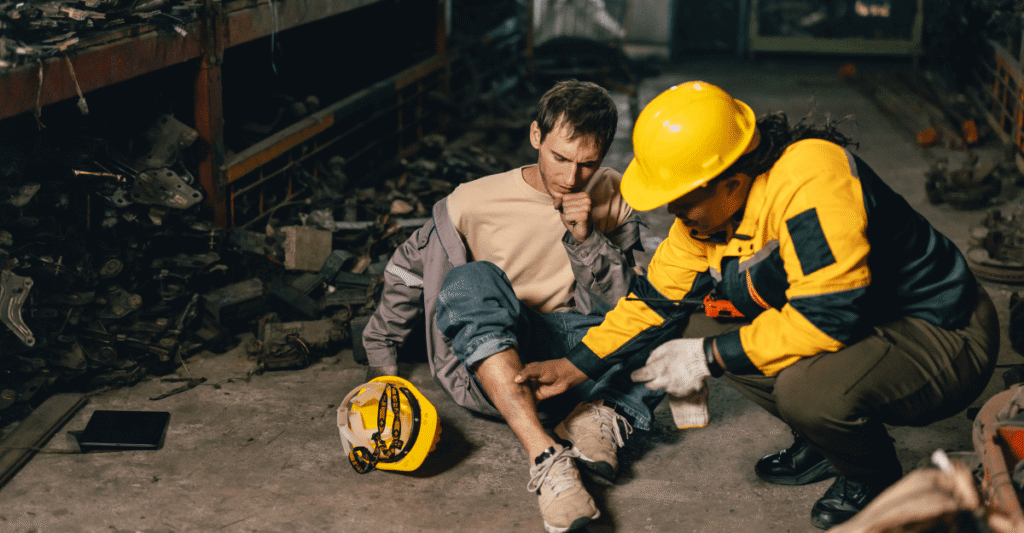
Morgantown is often defined by the gold and blue of the university, but the local economy runs on much more than academic prowess. From the constant infrastructure projects along the Mileground and the I-79 corridor to the manufacturing hubs near the Monongahela River and the bustling retail centers in Suncrest, people are hard at work. While the university health system and the university itself are massive employers, thousands of residents work in construction, logistics, transportation, and industrial maintenance.
When an injury occurs on the job, most workers immediately think of workers’ compensation. That is the standard safety net.
The Distinction Between Workers’ Compensation and Third-Party Claims
The West Virginia workers’ compensation system is designed as a “grand bargain.” In exchange for guaranteed medical coverage and wage replacement after an injury, workers generally give up the right to sue their employer, even if the employer made a mistake. This is often called the “workers’ compensation bar.” Because of this, many injured workers assume they have no legal recourse other than filing their claim and waiting for benefits.
A third-party claim changes this dynamic entirely. This is a civil personal injury lawsuit filed against a person or entity that is not your employer. Because this defendant is not protected by the workers’ compensation immunity, you can hold them fully accountable for their negligence. These two claims often run parallel to each other. You can collect your workers’ compensation benefits to handle immediate medical bills while simultaneously pursuing a third-party claim to recover damages that workers’ comp simply will not pay, such as pain and suffering.
Construction Site Liability in Monongalia County
Construction sites are prime examples of “multi-employer worksites.” Whether it is a road crew fixing potholes on Don Knotts Boulevard or a commercial team erecting a new complex near Cheat Lake, you rarely find just one company on site. You have the general contractor, excavators, electricians, plumbers, and masonry subcontractors all working in close proximity.
If you are a plumber employed by Company A, and a heavy equipment operator employed by Company B backs a loader over your foot, Company A pays your workers’ compensation. However, Company B is a third party. They can be sued for the negligence of their operator.
Common scenarios in Morgantown construction zones that lead to these claims include:
- Scaffolding Collapses: Often erected by a dedicated scaffolding company separate from the workers using it.
- Trench Collapses: Where an excavation subcontractor fails to install proper shoring boxes, injuring a utility worker from a different firm.
- Dropped Objects: When a roofer or carpenter on an upper level drops tools or materials onto a worker from a different trade below.
- Electrical Hazards: When a temporary power specialist leaves live wires exposed, they can injure a finisher or painter.
Vehicle Accidents on the I-79 and I-68 Corridor
For many Morgantown residents, the office is the cab of a truck, a delivery van, or a sales vehicle. The convergence of Interstate 79 and Interstate 68 creates a high-volume, high-risk environment for professional drivers. If you are driving for work—whether you are delivering parts to a mine site or ferrying clients to the airport—and you are struck by another driver, that other driver is a third party.
This is one of the most common forms of third-party workplace claims. While your employer’s insurance covers your medical treatment, the negligent driver (and their insurance carrier) is liable for the collision. This applies to:
- Delivery Drivers: UPS, FedEx, or local courier drivers struck by distracted motorists.
- Home Health Aides: Nurses traveling between patients’ homes who are rear-ended.
- Sales Representatives: Professionals traveling to client sites who are involved in intersection collisions.
- Heavy Truck Operators: Truck drivers injured by the negligence of passenger vehicle drivers or other commercial fleet operators.
Premises Liability for Visiting Workers
Many jobs require workers to enter properties not owned by their employer. This includes utility meter readers, health inspectors, real estate agents, social workers, and delivery personnel. Property owners in West Virginia have a legal duty to maintain their premises in a reasonably safe condition or to warn visitors of non-obvious dangers.
If a delivery driver steps onto a rotting porch in Westover and falls through, the homeowner or landlord may be liable. If a sales rep visits a manufacturing plant in the industrial park and trips over loose cabling left in a walkway by the maintenance crew, the plant owner faces premises liability.
To succeed in these claims, it must be proven that:
- The property owner knew or should have known about the hazard.
- The owner failed to fix it or warn the visitor.
- The hazard directly caused the injury.
Defective Equipment and Product Liability
In the industrial and extraction sectors prominent in Northern West Virginia, workers rely on heavy machinery and specialized tools. When this equipment fails, the results are often catastrophic. If a machine malfunctions due to a manufacturing defect, a design flaw, or a failure to provide adequate warnings, the manufacturer of that machine can be held liable.
This is strictly different from an employer failing to maintain a machine (which might be a “deliberate intent” case). This focuses on the company that built the tool. Examples include:
- Safety Harnesses: A fall protection harness where the stitching rips under a standard load.
- Power Tools: Grinders or saws that lack proper guards or have defective shut-off switches.
- Heavy Machinery: Forklifts or excavators with blind spots caused by poor design or braking systems that fail.
- Chemical Exposure: Industrial cleaners or solvents are sold with inadequate warning labels regarding respiratory risks.
The Role of Subcontractors and Independent Contractors
The modern workforce is increasingly fragmented. Large companies often hire independent contractors for specialized tasks like maintenance, security, or cleaning. If a janitorial service waxes a floor in an office building but fails to put up “Wet Floor” signs, and an office worker slips and suffers a spinal injury, the janitorial company is a third party.
Identifying the employment status of the at-fault person is a significant part of the investigation. In some cases, contracts between companies attempt to shift liability. A thorough legal review of the service agreements and contracts is necessary to determine exactly who was responsible for the safety of the specific area or task where the injury occurred.
Damages Recoverable in Third-Party Lawsuits
The primary reason to pursue a third-party claim is that workers’ compensation benefits are limited by statute. They pay for medical care and a portion of lost wages (usually two-thirds), but nothing more. They do not account for the human cost of the injury. A civil lawsuit against a third party allows a worker to seek to be made “whole.”
Damages in a third-party claim may include:
- Full Lost Wages: Recovering the difference between the workers’ comp payments and the actual salary, as well as lost future earning capacity.
- Pain and Suffering: Compensation for physical agony, surgical recovery, and chronic pain.
- Loss of Enjoyment of Life: Damages for the inability to hike at Coopers Rock, play with children, or engage in hobbies.
- Emotional Distress: Compensation for anxiety, depression, or PTSD resulting from the trauma.
- Consortium Claims: Compensation for the spouse of the injured worker for the loss of companionship and services.
The Importance of Immediate Evidence Preservation
In any workplace accident, evidence begins to disappear the moment the scene is cleared. This is particularly true in third-party cases involving products or construction sites. A defective tool might be thrown in a dumpster. A dangerous trench might be filled in. Surveillance footage from a delivery dock might be overwritten after 48 hours.
To build a viable claim, immediate action is required. This often involves sending “spoliation of evidence” letters to all involved companies, demanding that they preserve relevant items, documents, and video footage. It may also require deploying independent experts—such as engineers or accident reconstructionists—to the scene to document the conditions before they change. Relying solely on the employer’s internal accident report is rarely sufficient, as their focus is often on limiting their own liability rather than documenting the fault of a third party.
Time Limits for Filing Claims in West Virginia
The timeline for legal action is strict. In West Virginia, the statute of limitations for filing a personal injury lawsuit is generally two years from the date of the accident. This is distinct from the deadlines for reporting an injury to an employer for workers’ compensation, which are much shorter.
Waiting to see how the medical recovery progresses before investigating the legal options can be a critical error. If the two-year window closes, the right to seek compensation from a negligent third party is lost forever, regardless of how severe the injuries are or how clear the negligence was.
Contact Our Morgantown Workplace Injury Team
If you have been injured on the job in Morgantown or the surrounding areas, do not assume that workers’ compensation is your only path to financial stability. There may be other parties responsible for your suffering. The legal team at Bailey, Javins, & Carter, L.C. has a long history of investigating complex workplace accidents and holding negligent third parties accountable. We invite you to discuss the specifics of your accident with us. We can help identify whether a subcontractor, equipment manufacturer, or property owner contributed to your injury. Contact us today to schedule a free consultation and let us help you protect your future.