
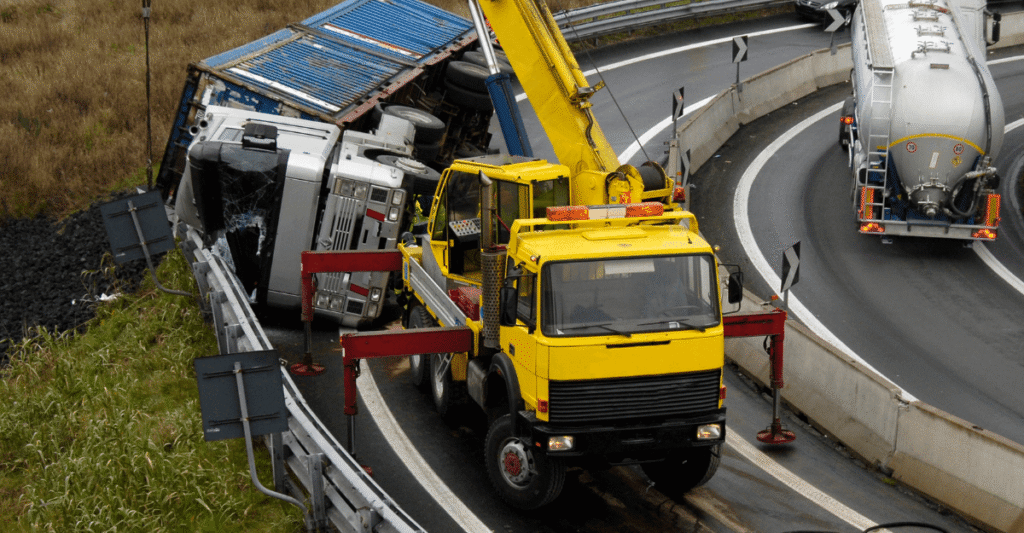
When a commercial truck accident occurs on a busy stretch of Interstate 79 near Morgantown, the aftermath is often a chaotic scene of twisted metal, flashing lights, and significant traffic delays. For those injured, however, the chaos is just beginning. The immediate focus is on medical care, but soon, questions about how and why the crash happened become paramount. In the past, answering these questions involved piecing together information from driver logbooks, witness statements, and physical evidence from the crash scene—a process that could be fraught with inaccuracies and incomplete data. Today, a piece of technology inside the truck’s cab is revolutionizing how these claims are handled: the electronic logging device (ELD).
What Are Electronic Logging Devices (ELDs)?
An Electronic Logging Device, or ELD, is a federally mandated piece of technology that connects directly to a commercial truck’s engine. Its primary purpose is to automatically record a driver’s Hours of Service (HOS)—the time spent driving, on-duty but not driving, and resting. This requirement, enforced by the Federal Motor Carrier Safety Administration (FMCSA), was put in place to combat driver fatigue, a well-known factor in many serious truck accidents.
Unlike the paper logbooks of the past, which could be easily altered or falsified, ELDs create a tamper-resistant record of a driver’s activities. The device records a wealth of information beyond just driving time, including:
- Engine Hours: When the truck’s engine is running.
- Vehicle Movement: The time the vehicle is in motion.
- Miles Driven: The total distance covered.
- Location Information: GPS data that tracks the truck’s position.
- Engine Power Status: When the vehicle is turned on or off.
This data provides an unbiased, second-by-second account of the truck’s operation, offering a clear window into the driver’s actions and the vehicle’s performance in the minutes and hours before a crash.
The Role of Driver Fatigue in I-79 Accidents
Interstate 79 through Morgantown presents unique challenges for commercial truck drivers. The combination of steep grades, winding roads, and often unpredictable weather can test the limits of even the most experienced operator. When driver fatigue is added to this mix, the risk of a catastrophic accident increases substantially.
The FMCSA’s Hours of Service regulations are designed to prevent this very scenario. These rules strictly limit how long a commercial driver can be behind the wheel without taking a mandatory rest break. A fatigued driver may experience:
- Slowed Reaction Times: A diminished ability to respond quickly to sudden hazards, such as a vehicle braking ahead or an animal on the road.
- Impaired Judgment: Difficulty making sound decisions, such as misjudging speed or distance when changing lanes.
- Reduced Awareness: A decreased perception of the surrounding environment, sometimes leading to “tunnel vision.”
ELD data is instrumental in proving whether a driver violated HOS rules. If the electronic log shows a driver was on the road for longer than the legal limit or failed to take the required off-duty breaks, it establishes a strong presumption of negligence. This objective data can cut through a driver’s or motor carrier’s claims that they were well-rested and operating safely.
How ELD Data Becomes Evidence in an Accident Claim
Following a serious truck accident, the data stored on the ELD is a vital piece of evidence. A skilled legal team will move quickly to ensure this data is preserved by sending a spoliation letter to the trucking company. This formal notice legally obligates the company to save all relevant electronic data from the truck, including the ELD records.
Once obtained, this data is analyzed by transportation and accident reconstruction professionals. They can use the information to build a precise timeline of the truck’s movements leading up to the collision. For example, the data might reveal:
- Excessive Speed: The ELD can show if the driver was exceeding the speed limit for that particular segment of I-79, a common factor in loss-of-control accidents on steep downgrades.
- Hard Braking Events: The device may log instances of sudden, forceful braking, which could indicate a near-miss or aggressive driving behavior shortly before the main incident.
- Lack of Rest: The log will clearly show if the driver had been on the road for an extended period without a break, confirming a potential HOS violation.
- Location Discrepancies: The GPS data can be used to verify the truck’s location at specific times, which can be compared against the driver’s statements and other records like fuel receipts or delivery schedules.
This detailed, impartial information can be used to counter defenses from the trucking company and demonstrate how the driver’s actions—or inactions—directly contributed to the crash.
Who Can Be Held Liable in a Commercial Truck Accident?
While the truck driver’s actions are often the immediate focus, liability in a commercial vehicle accident case can extend to several other parties. The chain of responsibility in the commercial transportation industry is complex, and identifying every at-fault party is important for ensuring victims receive full compensation for their injuries.
Parties that may share liability include:
- The Motor Carrier (Trucking Company): The company that employs the driver has a duty to ensure its drivers are properly trained, qualified, and compliant with all safety regulations. If a carrier pressures its drivers to violate HOS rules to meet tight deadlines or fails to maintain its vehicles properly, it can be held directly negligent. ELD data can sometimes reveal a pattern of HOS violations across a company’s fleet, suggesting a systemic disregard for safety.
- The Shipper: The company that owns the cargo being transported also has legal responsibilities. If a shipper improperly loads a trailer, causing the weight to be unbalanced, it can lead to a rollover or loss of control. Shippers are also responsible for accurately describing the cargo’s weight and ensuring it does not exceed legal limits. Overloading a truck seriously compromises its braking and handling capabilities.
- The Broker: In many cases, a freight broker connects a shipper with a motor carrier. If a broker hires a trucking company with a known history of safety violations or a poor safety rating simply to save money, they may be held liable for negligent selection.
- Maintenance Companies: If a mechanical failure contributed to the accident—such as brake failure on one of I-79’s steep grades—any third-party company responsible for inspecting and maintaining the truck could be held responsible for a negligent repair.
A thorough investigation is required to untangle these relationships and determine how the actions of each party may have contributed to the accident.
What Compensation Can Be Recovered After a Truck Accident?
The consequences of a collision with a large commercial truck are often severe and life-altering. Victims may face a long road to recovery, involving extensive medical treatment, rehabilitation, and time away from work. The goal of a personal injury claim is to recover compensation, known as damages, to address these losses.
Damages available in a West Virginia truck accident claim can include:
- Medical Expenses: This covers all costs related to the injury, including emergency room care, hospital stays, surgeries, doctor’s appointments, physical therapy, and prescription medications. It also includes anticipated future medical needs.
- Lost Wages: Compensation for the income lost while unable to work during recovery.
- Loss of Earning Capacity: If the injuries are permanent and prevent the victim from returning to their previous job or earning the same level of income, they can be compensated for this future loss.
- Pain and Suffering: This accounts for the physical pain and emotional distress caused by the accident and injuries.
- Property Damage: The cost to repair or replace the victim’s vehicle and any other personal property damaged in the crash.
- Loss of Consortium: In some cases, the uninjured spouse of a victim may be able to claim damages for the loss of companionship and services resulting from the injuries.
In cases where the conduct of the at-fault party was particularly reckless or egregious—such as a trucking company intentionally pressuring drivers to falsify logs before the ELD mandate—a jury may also award punitive damages. These are intended not to compensate the victim, but to punish the defendant and deter similar conduct in the future.
Navigating the Complexities of Shared Fault in West Virginia
It is not uncommon for the defense in a truck accident case to argue that the injured person was partially to blame for the accident. In West Virginia, this issue is governed by a legal principle known as modified comparative negligence.
Under this rule, you can still recover damages as long as you are found to be 50% or less at fault for the accident. However, your total compensation award will be reduced by your percentage of fault. For example, if a jury determines you were 10% at fault for the collision and awards $100,000 in damages, your final recovery would be reduced by 10%, to $90,000.
If you are found to be 51% or more at fault, you are barred from recovering any compensation at all. This makes it extremely important to build a strong case that minimizes any potential allocation of fault to you. The objective data from an ELD can be invaluable in this regard, as it can definitively show the truck driver’s speed, driving time, and other actions, leaving less room for the defense to shift blame.
Connect With Bailey, Javins & Carter, L.C. Today
The aftermath of a serious truck accident on I-79 is an overwhelming experience. Victims and their families are faced with physical pain, emotional trauma, and mounting financial burdens. The legal team at Bailey, Javins & Carter, L.C. is prepared to conduct a thorough investigation into every aspect of your accident. We work to identify all responsible parties, from the driver to the motor carrier to the shipper, and meticulously gather the evidence needed—including critical ELD data—to build a compelling case. Our focus is on fighting for the full and fair compensation you and your family need to move forward.
If you have been injured or lost a loved one in a commercial truck accident in or near Morgantown, let’s have a conversation about your legal options. Call our firm at 678-981-5370 to discuss your case with a dedicated member of our team.