Can I Sue for Inadequate Safety Warnings on Equipment?
The industrial heartbeat of West Virginia relies heavily on massive, complex machinery. From the deep underground coal seams of the Appalachian extraction sites to the bustling manufacturing floors along the Route 119 corridor, workers interact with heavy equipment every single day. Operating continuous miners, longwall shearers, industrial stamping presses, and commercial logging equipment inherently involves high levels of physical risk.
To mitigate these occupational hazards, equipment manufacturers are legally obligated to provide clear, visible, and durable safety warnings. When a manufacturer fails to place adequate warning labels on their machinery, they place the entire workforce in immediate jeopardy.
The moments following an industrial machinery accident are chaotic and terrifying. A worker might be rushed to the Charleston Area Medical Center (CAMC) with severe crush injuries, amputations, or traumatic brain injuries because a machine operated in a way they were never warned about. In the aftermath, injured workers and their families are left grappling with mounting medical bills, lost wages, and permanent physical disabilities.
What Constitutes a Failure to Warn Under West Virginia Law?
Under West Virginia law, a failure to warn occurs when a manufacturer does not provide adequate safety warnings or instructions about non-obvious dangers associated with a product. If an equipment manufacturer knows of a hidden risk but omits proper warning labels, they can be held strictly liable for resulting injuries.
The legal landscape surrounding defective products in the state is governed by specific legislative statutes and landmark court decisions. West Virginia Code Section 55-7-31 explicitly recognizes the failure to warn or protect against a danger or hazard in the use or misuse of a product as a valid cause of action in product liability lawsuits. This means that a product does not have to be assembled incorrectly to be considered legally defective; a missing or inadequate warning label is enough to render the equipment unreasonably dangerous to the end-user.
In the fast-paced environment of a commercial workplace, operators rely on visual cues and explicit instructions to stay safe. If a piece of machinery has a specific pinch point, a risk of electrical arc flash, or a tendency to kick back materials during normal operation, the manufacturer must clearly communicate these non-obvious hazards. A failure to warn typically manifests in several distinct ways across industrial environments:
-
Complete omission of warning decals regarding a known, non-obvious hazard.
-
Providing safety manuals that contain vague, confusing, or contradictory instructions.
-
Failing to warn users about the specific physical consequences of bypassing a safety guard.
-
Placing warning labels in locations where the operator cannot see them while running the machine.
-
Using inferior adhesives or materials that allow the warning decal to easily peel off, fade, or wash away in harsh industrial conditions.
How Do Courts Define an Inadequate Safety Warning?
West Virginia courts define an inadequate safety warning as one that fails to properly communicate non-obvious hazards to a typical user. A warning is legally inadequate if it is obscured, written in confusing language, or fails to address foreseeable misuse that could result in severe physical harm.
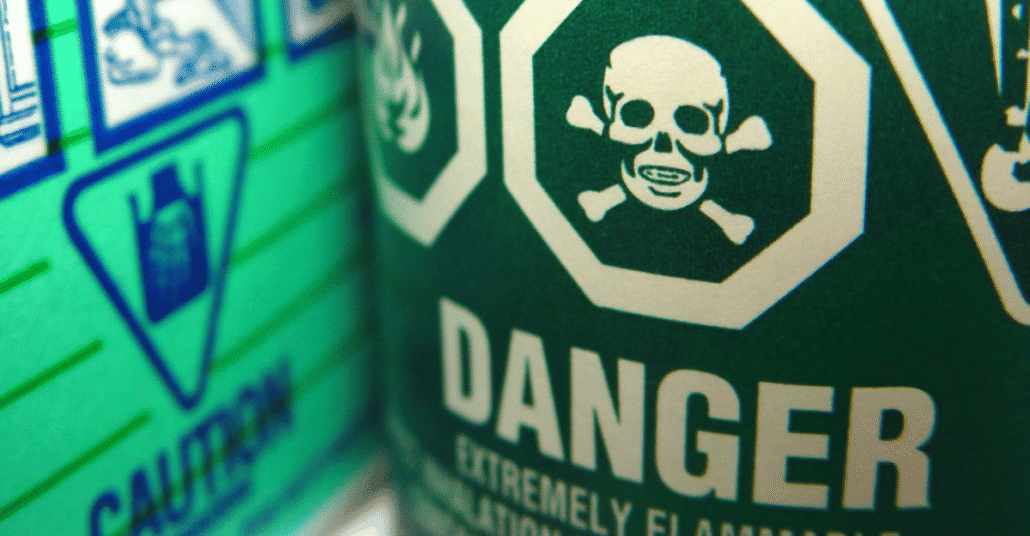
Determining the adequacy of a warning label involves analyzing industry standards and the physical realities of the workplace. The American National Standards Institute (ANSI) provides comprehensive guidelines for equipment warning labels, dictating specific color codes, signal words like ‘DANGER’ or ‘WARNING,’ and universally recognized pictorial symbols. If an equipment manufacturer deviates from these recognized standards and uses tiny font sizes or ambiguous language, Kanawha County Circuit Court judges and juries may determine the warning was legally insufficient.
Furthermore, the placement and durability of the label are heavily scrutinized. In a West Virginia coal mine or a heavy timber operation, machinery is subjected to extreme vibration, dirt, grease, and moisture. A paper sticker placed near a grease fitting will inevitably become illegible within weeks.
Manufacturers must anticipate these harsh environmental factors and use etched metal plates or highly durable synthetic decals. If a warning label wears off during normal operation and the manufacturer knew this was likely to happen, the warning is fundamentally inadequate.
Who Can Be Held Liable for Missing Safety Labels on Machinery?
In West Virginia product liability cases, the original equipment manufacturer is primarily held liable for missing safety labels. However, distributors and third-party sellers can also face liability under specific conditions, especially if they modified the equipment, removed original warning decals, or knew about the defect before selling it.
Product liability law examines the entire chain of commerce to determine liability. When a piece of heavy machinery injures a worker due to a lack of safety warnings, the responsibility typically starts at the top with the original equipment manufacturer (OEM). The manufacturer designed the product, understood its mechanical capabilities, and possessed the primary duty to test for hazards and apply the appropriate warnings before the machine ever entered the commercial market.
However, liability is not always limited to the OEM. Other entities in the distribution chain might share responsibility for the victim’s injuries. Identifying the correct defendants requires a thorough investigation of the equipment’s history, from the assembly line to the factory floor. Potential defendants in a failure to warn lawsuit may include:
-
The Original Equipment Manufacturer (OEM) who failed to design and affix adequate labels.
-
Third-party component manufacturers if a specific, dangerous part lacked its own necessary warning.
-
Commercial distributors or wholesalers who knowingly sold machinery that lacked mandated safety decals.
-
Equipment leasing companies that rent out heavy machinery but fail to maintain or replace worn-off warning labels between rentals.
-
Maintenance contractors who paint over, remove, or damage safety warnings during routine servicing without replacing them.
Can I Sue the Equipment Manufacturer Directly?
Yes, injured workers can sue the equipment manufacturer directly for inadequate safety warnings. Unlike workers’ compensation claims, which provide immunity to employers, product liability claims target third-party manufacturers who breached their legal duty to provide safe, properly labeled machinery to the commercial market.
A common point of confusion for injured workers is the intersection of workers’ compensation and third-party lawsuits. Generally, if you are injured on the job in West Virginia, you are entitled to file a workers’ compensation claim through your employer’s insurance. This system provides coverage for immediate medical bills and a portion of your lost wages. However, workers’ compensation provides employers with immunity from standard personal injury lawsuits, preventing you from suing your boss directly for negligence in most standard scenarios.
Product liability claims operate entirely outside of the workers’ compensation system. When your injury is caused by defective machinery lacking proper safety warnings, you are filing a third-party claim against the manufacturer, not your employer. This distinction is vital because a successful third-party product liability lawsuit allows victims to recover comprehensive damages that workers’ compensation simply does not cover, including full wage replacement and compensation for physical pain and suffering.
Do I Need to Prove Negligence to Win a Product Liability Claim?
You do not need to prove traditional negligence to win a product liability claim in West Virginia. The state applies the strict liability standard, meaning you only need to prove the equipment was defective due to a failure to warn, and that this specific defect proximately caused your injuries.
The legal framework for product liability in the state was fundamentally shaped by the landmark West Virginia Supreme Court of Appeals decision in Morningstar v. Black & Decker Mfg. Co. (1979). This pivotal ruling established the strict liability standard for defective products. Under strict liability, an injured worker does not have to jump through the difficult legal hoops of proving that the manufacturer was explicitly careless or actively negligent in their quality control processes.
Instead, the focus of the lawsuit shifts entirely from the manufacturer’s behavior to the condition of the product itself. The core argument is whether the product was reasonably safe for its intended use. If a piece of equipment lacks a necessary safety warning, it is, by definition, not reasonably safe. To successfully win a strict product liability claim based on a failure to warn, our legal team works to prove the following specific elements:
-
The equipment was defective at the time it left the manufacturer’s control due to the absence of an adequate warning label.
-
The missing or inadequate warning rendered the machinery unreasonably dangerous.
-
The operator was using the equipment in a reasonably foreseeable manner.
-
The lack of the warning label was the direct and proximate cause of the worker’s injuries.
Can I Sue If I Was Using the Equipment Incorrectly at the Time?
You may still have a valid claim even if you were using the equipment incorrectly, provided the misuse was reasonably foreseeable to the manufacturer. West Virginia law requires manufacturers to provide adequate safety warnings against common, foreseeable misuses of their machinery to protect operators from severe harm.
A frequent defense tactic used by corporate legal teams is attempting to shift the blame entirely onto the injured worker. The manufacturer’s insurance carrier will quickly argue that the worker was operating the machinery incorrectly, bypassing safety protocols, or using the tool for an unintended purpose, thereby voiding the manufacturer’s liability. While completely unpredictable and reckless behavior might absolve a manufacturer, the law recognizes the reality of industrial workplaces through the doctrine of foreseeable misuse.
Manufacturers know exactly how their equipment is used in the real world. They conduct extensive market research, monitor industry practices, and review past accident reports. If a specific type of misuse is common within an industry, the manufacturer cannot simply turn a blind eye. They have a legal duty to anticipate these common shortcuts and provide explicit warnings against them. If they fail to warn against a foreseeable misuse, they remain liable for the resulting injuries.
Does Foreseeable Misuse Require A Warning Label?
Yes, manufacturers must anticipate how workers actually use their products in real-world environments. If a specific type of machinery misuse is common and foreseeable, the manufacturer is legally obligated to place clear, conspicuous warning labels addressing that specific hazard to prevent severe workplace accidents.
Consider the daily operations at a West Virginia logging site or a coal extraction operation. Production quotas are high, and workers are frequently pushed to maintain a rapid pace. In these high-pressure environments, workers might occasionally bypass a physical safety guard to clear a jammed conveyor belt faster, or they might use a piece of heavy equipment to lift materials slightly beyond its intended weight capacity. Because manufacturers are fully aware that these specific actions occur regularly in the field, they must place explicit warning decals right at the point of interaction.
A manufacturer cannot hide behind a small sentence buried on page forty of a dense user manual. If a worker is likely to remove a protective housing to conduct rapid maintenance, there must be a highly visible, durable warning label located directly on that housing, explicitly stating the severe physical dangers of operating the machine without the guard in place. Failing to provide this point-of-contact warning makes the manufacturer liable when the foreseeable shortcut inevitably leads to an amputation or crush injury.
What Compensation Is Available for a Failure to Warn Injury?
Victims of defective machinery in West Virginia can recover comprehensive damages through a product liability lawsuit. Available compensation includes reimbursement for past and future medical bills, lost wages, diminished earning capacity, permanent disability, and non-economic damages such as physical pain and emotional suffering.
The injuries sustained from heavy industrial machinery are rarely minor. Victims often require emergency trauma care, multiple reconstructive surgeries, and years of specialized physical therapy. A successful product liability lawsuit aims to make the victim whole again, providing financial security for both their immediate needs and their long-term future. By holding the negligent manufacturer accountable, victims can recover a wide range of damages.
Depending on the specific facts of the case presented in civil court, an injured worker may be entitled to recover the following forms of compensation:
-
Complete coverage of all past emergency medical expenses and hospital stays.
-
Funding for future medical treatments, including surgeries, rehabilitation, and necessary medical equipment.
-
Reimbursement for wages lost during the immediate recovery period.
-
Compensation for diminished future earning capacity if the injuries prevent a return to the same industrial profession.
-
Non-economic damages for severe physical pain, emotional distress, and loss of enjoyment of life.
-
Compensation for permanent physical disfigurement, scarring, or amputations resulting from the defective machinery.
Secure Experienced Legal Representation for Your Machinery Injury
Taking on massive equipment manufacturers and their corporate insurance defense teams requires extensive resources and dedicated legal advocacy. If you or a loved one suffered a catastrophic injury due to missing or inadequate safety warnings on industrial equipment, the legal team at Bailey, Javins, & Carter, L.C. is here to stand by your side. We focus on complex industrial and workplace machinery injuries across West Virginia, working tirelessly to hold negligent corporations accountable for the harm they cause.
Contact our Charleston office today to schedule a free, confidential consultation. Let us secure the evidence and handle the legal fight while you focus entirely on your physical recovery.
Frequently Asked Questions
What is the difference between a design defect and a failure to warn?
A design defect means the product is inherently dangerous because of how it was engineered, regardless of how it was manufactured or labeled. A failure to warn means the product might be designed perfectly well, but the manufacturer failed to provide adequate instructions or safety labels regarding hidden hazards. Both are valid grounds for a strict product liability lawsuit in West Virginia.
Can I file a claim if the warning label wore off over time?
Yes, you can still file a claim. Manufacturers have a legal duty to use warning labels that are durable enough to withstand the expected environment where the equipment will be used. If a paper label predictably washes away in a heavy industrial setting, the manufacturer can be held liable for failing to provide a sufficiently durable warning.
Will a product liability lawsuit affect my workers’ compensation benefits?
No, a product liability lawsuit will not stop your workers’ compensation benefits. These two systems operate independently. You can continue receiving workers’ compensation for your medical bills and a portion of your wages while your legal team pursues a separate third-party claim against the equipment manufacturer for comprehensive damages.
What if the manufacturer is located outside of West Virginia?
You can still file a lawsuit. If an out-of-state or international manufacturer sells their equipment into the West Virginia commercial market, they are subject to the jurisdiction of the state’s courts. Our attorneys regularly pursue claims against massive national and global equipment manufacturers whose defective products injure local workers.
Do I need to keep the defective equipment as evidence?
Yes, preserving the physical equipment is incredibly important. However, since the machinery is usually owned by your employer, you likely do not have control over it. This is why securing legal representation immediately is necessary; your attorney will issue a formal preservation letter to legally stop the employer from repairing, moving, or destroying the machinery before it can be examined.

 https://www.reuters.com/investigates/special-report/bankruptcy-tactics-two-step/