Who Can Be Held Liable for Coal Truck Accidents in West Virginia?
Coal trucks are as much a part of West Virginia’s landscape as the mountains themselves. From the coalfields of Boone and Logan Counties to the industrial corridors along Interstate 79, these massive haulers are the workhorses of an industry that has defined our state for generations. But when a fully loaded coal truck is involved in a collision, the results can be devastating. Unlike a typical car accident, determining who bears legal responsibility for a coal truck crash often involves untangling a complicated web of drivers, trucking companies, mining operations, maintenance providers, and equipment manufacturers.
West Virginia law allows injured victims to pursue compensation from all parties whose negligence contributed to a crash. For families dealing with serious injuries or the loss of a loved one, understanding who can be held accountable is a necessary first step toward obtaining justice.
The Unique Risks of Coal Truck Collisions on West Virginia Roads
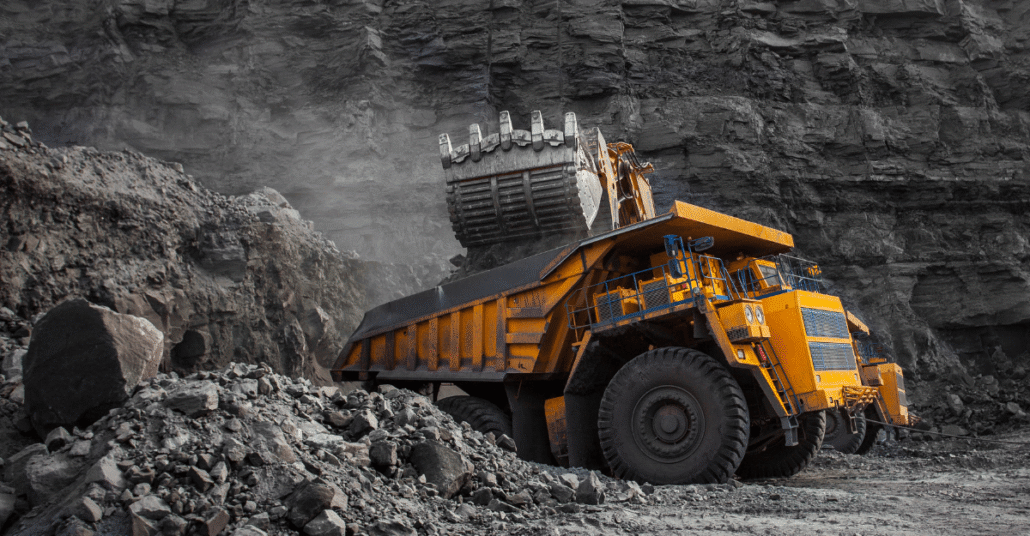
A standard passenger vehicle weighs roughly 4,000 pounds. A coal truck traveling on West Virginia’s designated coal resource transportation roads can legally weigh between 80,000 and 120,000 pounds, depending on the number of axles and the specific roadway. This disparity in mass creates a collision dynamic that is fundamentally different from a crash between two cars.
The physics are unforgiving. A fully loaded coal hauler traveling at highway speeds requires the length of nearly two football fields to come to a complete stop. On the steep grades found along routes like US-19, I-77 near Beckley, or the winding roads through McDowell and Mingo Counties, this stopping distance increases dramatically.
The high center of gravity created by a full load of coal makes these vehicles susceptible to rollovers on sharp curves, which are common throughout the southern coalfields. A rollover can spill tons of coal onto the roadway, creating secondary hazards for other motorists long after the initial crash.
The consequences of these collisions are often catastrophic: traumatic brain injuries from the violent impact, spinal cord damage resulting in permanent paralysis, multiple bone fractures requiring extensive surgeries, and tragically, fatalities that leave families without a provider and a source of guidance and support.
Who Is the Truck Driver’s Employer, and Why Does It Matter?
In West Virginia coal truck accident cases, the truck driver’s employer is almost always a liable party under the legal doctrine of respondeat superior, which holds employers responsible for the negligent acts of their employees performed within the scope of employment. Determining who exactly employs the driver, however, is not always straightforward.
The coal trucking industry in West Virginia operates through a patchwork of arrangements. Some drivers work directly for coal mining companies. Others are employed by independent trucking companies that contract with mines to haul coal to rail terminals, barge loading facilities, or power plants. Still others are owner-operators who lease their services to motor carriers. Each of these arrangements creates different chains of responsibility that a thorough investigation must trace.
The motor carrier—the company that holds the operating authority and is registered with the Federal Motor Carrier Safety Administration—typically bears primary liability for the actions of its drivers. This liability extends to the carrier’s own negligence in areas such as:
- Negligent Hiring: Failing to properly vet a driver’s background, driving history, and qualifications before placing them behind the wheel of a coal hauler.
- Inadequate Training: Not providing sufficient instruction on how to safely operate a heavy commercial vehicle on West Virginia’s challenging terrain, including the steep grades and sharp curves that characterize our coalfield roads.
- Hours-of-Service Violations: Pressuring or allowing drivers to exceed the federal limits on driving time, which are designed to prevent fatigue-related accidents.
- Failure to Maintain Equipment: Not implementing systematic inspection, repair, and maintenance programs for the trucks in their fleet.
Can the Mining Company Be Held Liable for a Coal Truck Accident?
Mining companies can absolutely be held liable for coal truck accidents, even when they use independent trucking contractors. This liability can arise in several ways, and proving it often requires digging into the operational relationship between the mine and the trucking operation.
First, if the mining company directly employs the truck drivers, standard employer liability applies. Second, and more commonly, liability can attach if the mining company exercises sufficient control over the trucking operation—dictating schedules, routes, loading procedures, or other aspects of the work—such that the drivers are effectively acting as agents of the mine despite being nominally employed by another company.
Third, mining companies are frequently responsible for loading the trucks at the mine site. West Virginia law requires that coal trucks operating on public highways cover and secure their loads with a tarp when traveling more than one mile. If a load is improperly secured at the mine and coal spills onto the roadway causing an accident, or if the load is unbalanced and causes the truck to become unstable and overturn, the company that loaded the truck can bear responsibility.
Overloading is another area where mining operations frequently share liability. The temptation to haul more coal per trip creates significant revenue, but an overweight truck puts excessive stress on braking systems, extends stopping distances, and makes the vehicle harder to control. When a collision is caused or worsened by an overweight load, the party responsible for loading that truck—typically the mining company—can be held accountable.
What About the Truck Driver Personally?
The driver of the coal truck is always potentially liable for their own negligent actions. Speeding, tailgating, distracted driving, driving while fatigued, and operating a vehicle under the influence of alcohol or drugs are all grounds for personal liability. In West Virginia, a driver who violates traffic laws or federal safety regulations can be held directly accountable for the injuries their negligence causes.
However, from a practical standpoint, the driver’s personal liability is often less significant than the liability of their employer or the mining company. Individual truck drivers rarely have sufficient personal assets or insurance coverage to compensate victims for catastrophic injuries. The motor carrier, by contrast, is required to carry substantial commercial liability insurance, and mining companies typically have significant financial resources. For this reason, pursuing claims against the companies involved is usually the most effective path to obtaining full compensation.
That said, investigating the driver’s conduct is essential because evidence of driver negligence directly supports claims against the employer. If a driver was fatigued because the trucking company pressured them to exceed hours-of-service limits, the company shares responsibility for putting a dangerous driver on the road.
Liability of Maintenance Providers and Parts Manufacturers
When a coal truck accident is caused by mechanical failure—brake failure on a steep grade near Bluefield, a tire blowout on I-64, or a steering malfunction on Route 50—the investigation must determine why the failure occurred. The answer often points to parties beyond the driver and the trucking company.
Third-party maintenance facilities that perform negligent repair work can be held liable for accidents their substandard work causes. If a mechanic improperly adjusts a braking system, fails to identify worn components during an inspection, or uses substandard parts, that maintenance provider can bear responsibility for resulting crashes. Motor carriers are required to maintain records of all inspections, repairs, and maintenance performed on their vehicles, and these records can reveal a pattern of deferred maintenance or negligent repair work.
In some cases, the failure is traceable not to maintenance negligence but to a defect in the truck or its components. Defective braking systems, faulty tires, and flawed steering mechanisms can all cause accidents despite proper maintenance. In these situations, the manufacturer of the defective component—or the truck manufacturer itself—can be held liable under product liability law. These claims require careful preservation and analysis of the failed component, which is why securing physical evidence immediately after an accident is so important.
Federal and State Regulations That Establish the Standard of Care
Coal trucks operating on West Virginia roads are subject to an extensive framework of federal and state regulations. Violations of these regulations are powerful evidence of negligence because they demonstrate that a party failed to meet the legally required standard of care.
At the federal level, the Federal Motor Carrier Safety Administration establishes baseline safety standards for interstate trucking. These regulations cover hours-of-service limits designed to prevent fatigued driving, driver qualification standards, vehicle maintenance requirements, drug and alcohol testing protocols, and cargo securement rules. Most commercial trucks are now required to use Electronic Logging Devices (ELDs) that automatically record driving time, making it easier to prove hours-of-service violations.
West Virginia adds its own layer of regulation. The West Virginia Public Service Commission has enforcement authority over coal trucks and commercial motor vehicles operating on state highways. State law designates certain roads in coal-producing counties—including Boone, Fayette, Lincoln, Logan, McDowell, Mercer, Mingo, Raleigh, Wayne, Wyoming, Nicholas, Webster, Braxton, and Clay—as coal resource transportation roads, which are subject to specific weight limits and permit requirements. Violations of these state requirements can establish liability just as federal violations can.
The Importance of Swift Investigation After a Coal Truck Crash
Trucking companies and their insurers do not wait to begin protecting their interests after a serious accident. They often have rapid-response teams that arrive at the scene while the wreckage is still being cleared. These teams work to preserve evidence favorable to the company and to identify potential defenses. Victims and their families deserve an equally aggressive investigation working on their behalf.
A thorough investigation will seek to preserve and analyze critical evidence, including:
- Electronic Control Module Data: Often called the truck’s “black box,” this device records speed, braking patterns, engine RPMs, and other data from the moments before and during a collision.
- Electronic Logging Device Records: These show the driver’s hours of operation and can reveal violations of fatigue-prevention regulations.
- Driver Qualification Files: These contain the driver’s employment history, training records, medical certifications, and any prior incidents.
- Post-Accident Drug and Alcohol Test Results: Federal regulations require testing after serious accidents.
- Vehicle Inspection and Maintenance Records: These can reveal a pattern of deferred maintenance or known mechanical problems.
- Bills of Lading and Load Tickets: These documents show the weight of the cargo and can prove overloading.
An experienced attorney will send spoliation letters to all potentially liable parties, demanding that they preserve this evidence and warning of legal consequences if it is destroyed or altered.
West Virginia’s Statute of Limitations: Time Is Limited
Under West Virginia Code § 55-2-12, you have two years from the date of injury to file a personal injury lawsuit. For wrongful death claims, the two-year period begins from the date of death. Missing this deadline will almost certainly result in the court dismissing your case, no matter how strong your evidence of negligence may be.
Two years may seem like adequate time, but the complex nature of coal truck accident cases—involving multiple potential defendants, extensive documentary evidence, and often the need for expert analysis—means that delay can be costly. Critical evidence can be lost, witnesses’ memories fade, and the trucking company’s own investigators gain an advantage. Contacting an attorney promptly after an accident ensures that preservation letters are sent, evidence is secured, and your claim is developed on a timeline that protects your rights.
Frequently Asked Questions
Can I sue if a coal truck spilled its load and caused my accident?
Yes. If an unsecured or improperly loaded coal truck spills its cargo onto the roadway and causes your accident, you can pursue claims against the parties responsible for loading and securing the load. West Virginia law requires coal trucks to cover and tarp their loads when traveling on public highways. A spilled load is often evidence of a violation of this requirement, which supports a negligence claim against the trucking company, the mining operation that loaded the truck, or both.
What if the coal truck driver was an independent contractor rather than an employee?
The distinction between employee and independent contractor affects which companies can be held vicariously liable for the driver’s negligence. However, motor carriers cannot escape responsibility simply by classifying drivers as independent contractors. Federal regulations hold the carrier that operates under the authority to transport goods responsible for the safety of operations conducted under that authority, regardless of the driver’s employment classification. Additionally, if the carrier or mining company exercised control over the driver’s work, they may be liable under agency principles despite the independent contractor label.
How long do I have to file a lawsuit after a coal truck accident in West Virginia?
West Virginia law generally provides two years from the date of injury to file a personal injury lawsuit and two years from the date of death to file a wrongful death lawsuit. However, the complexity of coal truck accident cases makes early action essential. Evidence must be preserved, multiple parties must be investigated, and expert witnesses may need to be retained. Beginning the legal process promptly gives your attorney the time needed to build the strongest possible case.
What if I was partially at fault for the accident?
West Virginia follows a modified comparative fault rule. You can recover compensation as long as you were not more at fault than the combined fault of all defendants. If you were 30% at fault and the defendants were 70% at fault, for example, you can still recover, but your compensation will be reduced by your percentage of fault. Insurance companies often try to shift blame to victims, so having an attorney who can counter these tactics is valuable.
Can I recover compensation if my family member was killed in a coal truck accident?
Yes. West Virginia law permits certain family members to file a wrongful death lawsuit when a loved one is killed due to another party’s negligence. This lawsuit can recover compensation for funeral expenses, the financial support the deceased would have provided, and the loss of companionship, guidance, and care. The personal representative of the deceased’s estate typically files the wrongful death claim on behalf of eligible family members.
Will my case go to trial, or will it settle?
Many coal truck accident cases are resolved through negotiated settlements without the need for a trial. However, settlement only makes sense when the offer fairly compensates you for your losses. Trucking companies and their insurers know which attorneys are prepared to take cases to trial if necessary, and that willingness to litigate often results in better settlement offers. If a fair settlement cannot be reached, having an attorney prepared to present your case before a jury in the appropriate West Virginia circuit court is essential to protecting your interests.
How much does it cost to hire an attorney for a coal truck accident case?
At Bailey, Javins & Carter, L.C., we handle coal truck accident cases on a contingency fee basis. This means you pay no attorney fees unless we recover compensation for you. We advance the costs of investigating your case, retaining expert witnesses, and pursuing your claim. This arrangement ensures that financial barriers do not prevent injured victims from accessing experienced legal representation.
Contact Our Team for a Consultation
A coal truck accident can turn your life upside down in an instant. The injuries are often severe, the financial pressures mount quickly, and the legal complexities can seem overwhelming. The legal team at Bailey, Javins & Carter, L.C. has dedicated decades to fighting for injured West Virginians and their families. We understand the trucking industry, the regulatory framework that governs it, and the investigation and litigation strategies that hold negligent parties accountable.
Your time to take legal action is limited under West Virginia law. Call our firm today at 800-497-0234 or contact us online to schedule a free, confidential consultation about your case. Let us handle the legal complexities so you can focus on your recovery.